
Throwing Stones at No one pt.4


If to be bewildered is to lose sight of where we are, to forget where we’ve been, to be cast away, what if we didn’t know where we were to begin with? Bewilderment can follow a collapse of reference and reconcilability, cracking open dialectics to witness motion of myriad selves.
Writing in the 1970s, Andrew Peto felt that vestibular system acts as a precursor of those mental functions grouped together as superego, this vestibular forerunner includes imagery and fantasies who develop in the course of those traumatic experiences of children that are part of maturational and developmental conflicts. Peto writes through Schilder and the stresses he laid on disturbances of vestibular life in relation to depersonalisation, or equilibrium of disturbance and interaction between ego and environment, claiming, in a manner that echoes Margulis and Sagan, that whenever a person is giddy, they cannot maintain the unity of their body.
Peto observed that such situations recreate childhood feelings of being abandoned and losing one’s balance, wherein vestibular interplay between superego and ego can be perceived as physical disorientation and giddiness. A situation of being cast away comes about and giddiness develops, symbolising in a somatic regressive form of moral conflict between ego and superego. This feeling may be experienced in a very concrete way, manifesting in confusion, despair, bewilderment, one part of self may look at another part or may feel in some eery way that they are separated from the other part.
Building on the research of Peto and Schilder, David Hubbard and Charles Wright studied the potential influence of gravity in relation to human personality development, and further speculated that alongside the more traditional stages of psychosexual development, that of oral, anal and genital, alongside the phallic and latent, there existed the gravitational (operative over a lengthy period of personality development), realising that said phase was in dire need of deeper consideration and attention. Hubbard and Wright stipulated that a gravitational stage could be more influential than many of the aforementioned Freudian stages of development, particularly in relation to personality function and neurological reflex. Subsequently they returned to the image of the infant’s first years of life, learning to move, to orient their physical body against and with such an ever-present being as gravity. Not to mention the subsequent maturational life of motor skill development and coordination in spite of such a pervasive energy, wherein the fear of gravitational pull may well serve as a paradigm of all subsequent fears.
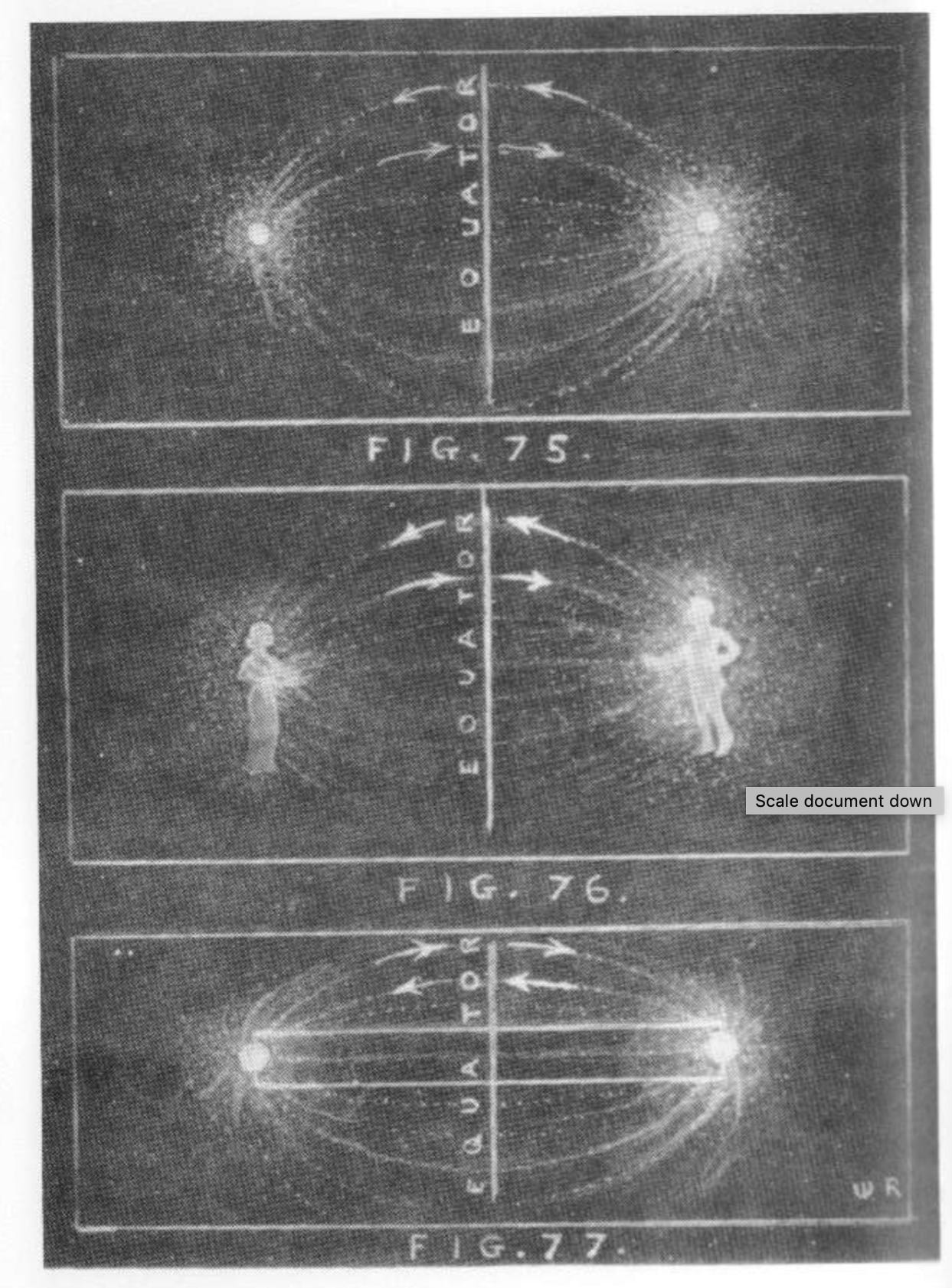
Evidently, attempts to overcome gravity, to become with gravity, constitute a principle struggle throughout early years of existence. Child, if possible, manages to control their position within crib, to sit, crawl, walk, run, jump, fall, even to be still. Gravity, in this sense, is felt to be a cause of first ego strain, leading Freud to remark, Where id was, ego shall be, to which Hubbard replied, and its perpetual antagonist is gravity, who speaks through their own organ.
Conscious sensation and affect might arise not only from motion, but from loss or gain of otoconial mass. One is other. Acuity of affective ear can be accurate in terms of one-millionth of a second in localisation of a sound source, and it is conceivable, according to Hubbard, that phylogenetically older vestibular labyrinth could have equal or even greater sensitivity in the perception of stimulus variations.

In Otto Isakower’s paper on auditory sphere he begins by commenting on Josef Breuer’s suggestion (in the late 1800s) that otolith organs do not play a role in the function of hearing, rather in the perception of movement and position of body, relative to environment. Isakower, a physician, relays an intriguing observation, he tells us that certain crustaceans lose their otoliths, together with their shell, at every moult, subsequently developing new ones, often by searching the aquarium floor, in order that they might fill their otocysts with grains of sand, literally coming apart, casting away.
Isakower compares this process of integration to development of ego, part of whom he calls human auditory sphere. Superego is then held as a mental derivative of a separate being, gravity, where ensouled environment appears as if a psychical organ of equilibrium*.
*For Isakower, the term sphere includes not only whole apparatus in all their portions from periphery to centre, but also part of psychical structure with whom sensorium is conjoined. I can’t help but append to this eerily mechanistic (yet addictively curious) premise, an observation made by Arthur Koestler in his book The Sleepwalkers. In a section titled The Arguments for the Earth’s Motion, Koestler writes on Copernican orthodoxy regarding circles and spheres, wherein gravity is a natural inclination combining parts into sphere, contributing to their unity and wholeness a property Copernicus claimed to be present even in the sun. Thus properties of a whole stick together because of their desire to make a perfect shape, responds Koestler, and thus gravity, to Copernicus, is the nostalgia of things to become spheres.